
Food delivery dispatch,
one connected fleet.
Food delivery dispatch software for your own courier fleet: track live orders, assign deliveries manually or through auto-dispatch, and coordinate collection with the restaurant. Customer ordering, POS and the courier app share the same order workflow.
Built for high delivery volume.
Five pillars on the same system, from order intake to delivery analytics.
One board, for your orders and the aggregators'.
Dispatch runs on the same data as your POS, your kitchen and your apps: every order, every courier and every delivery zone, all live, on one screen.
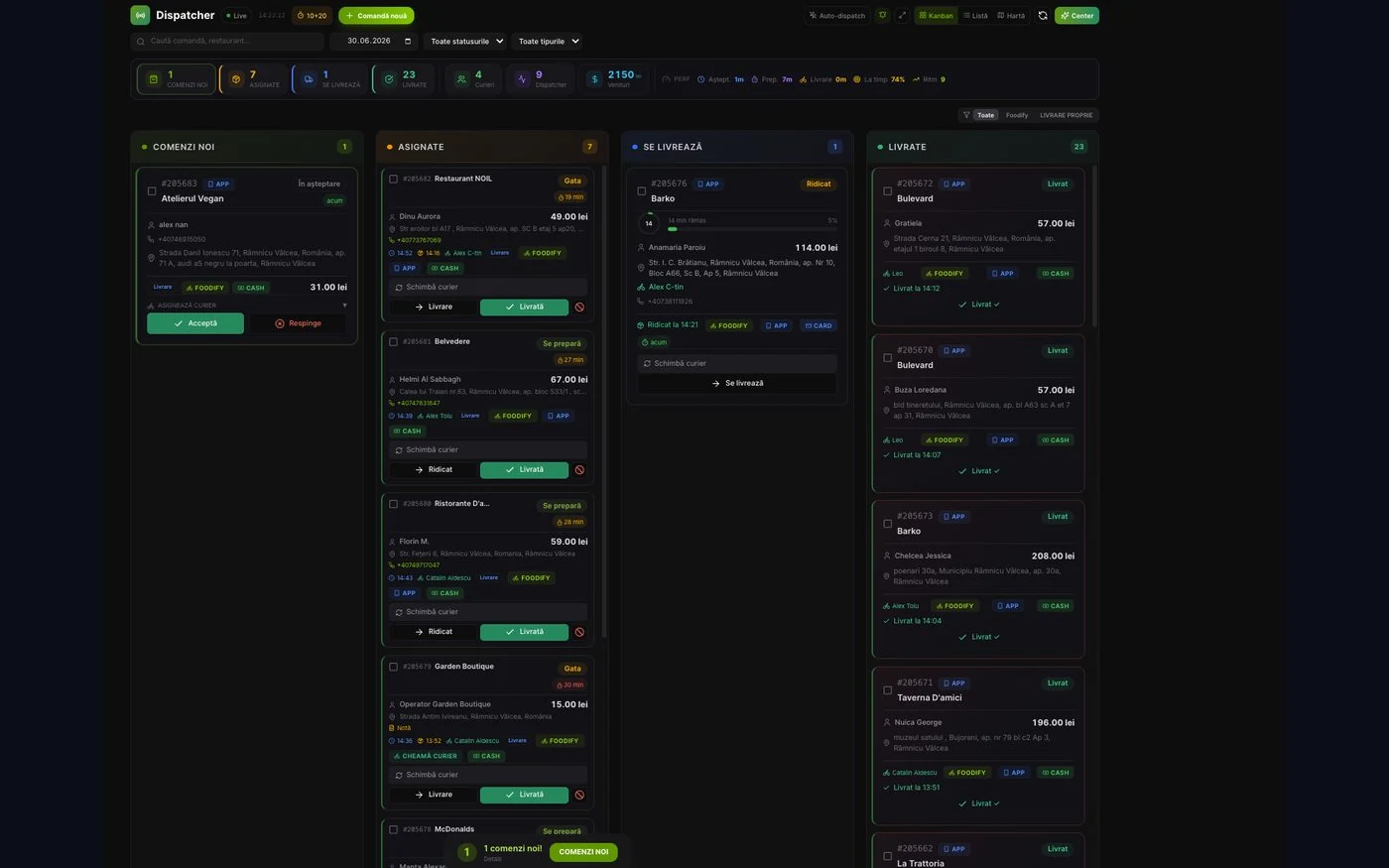
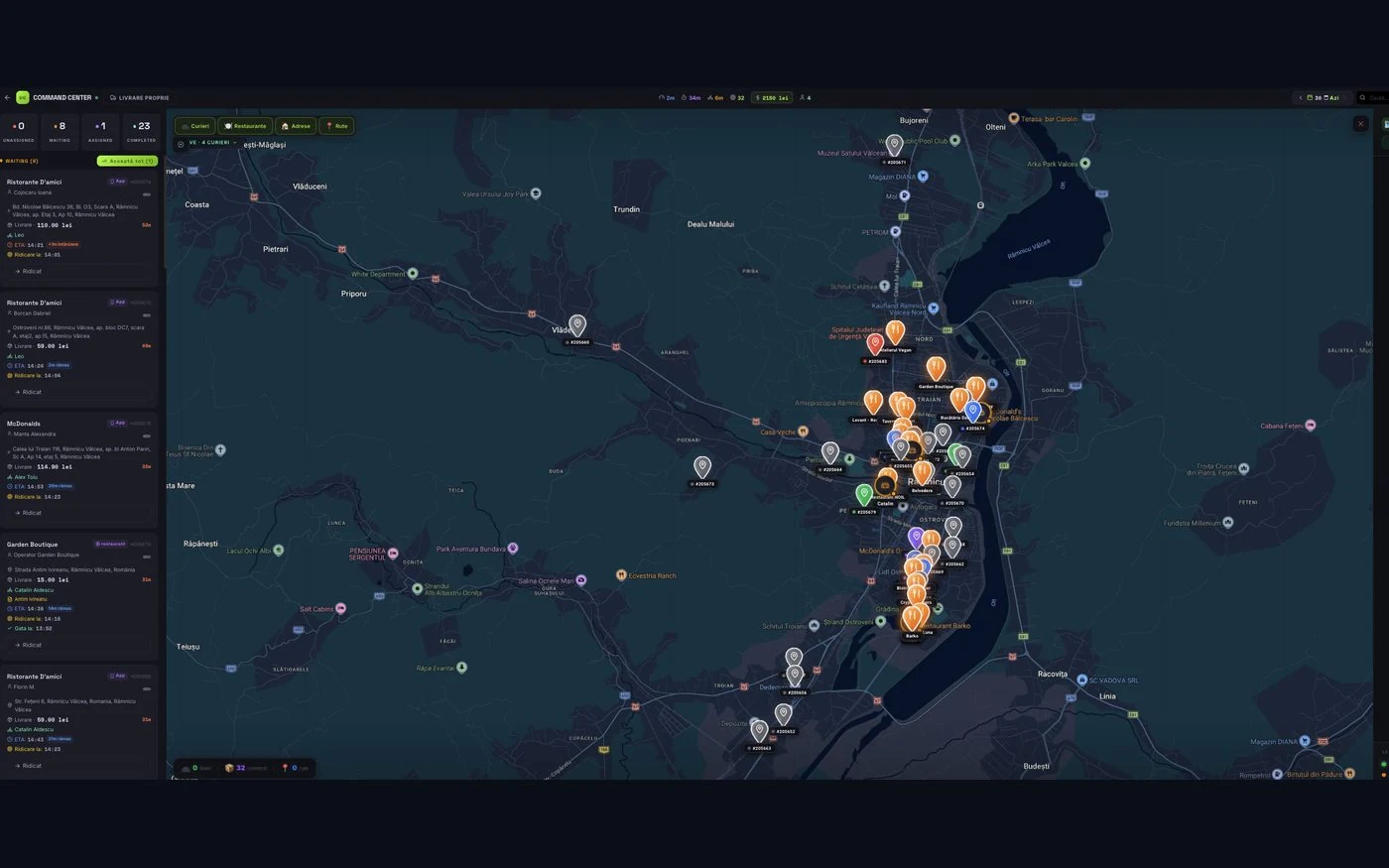
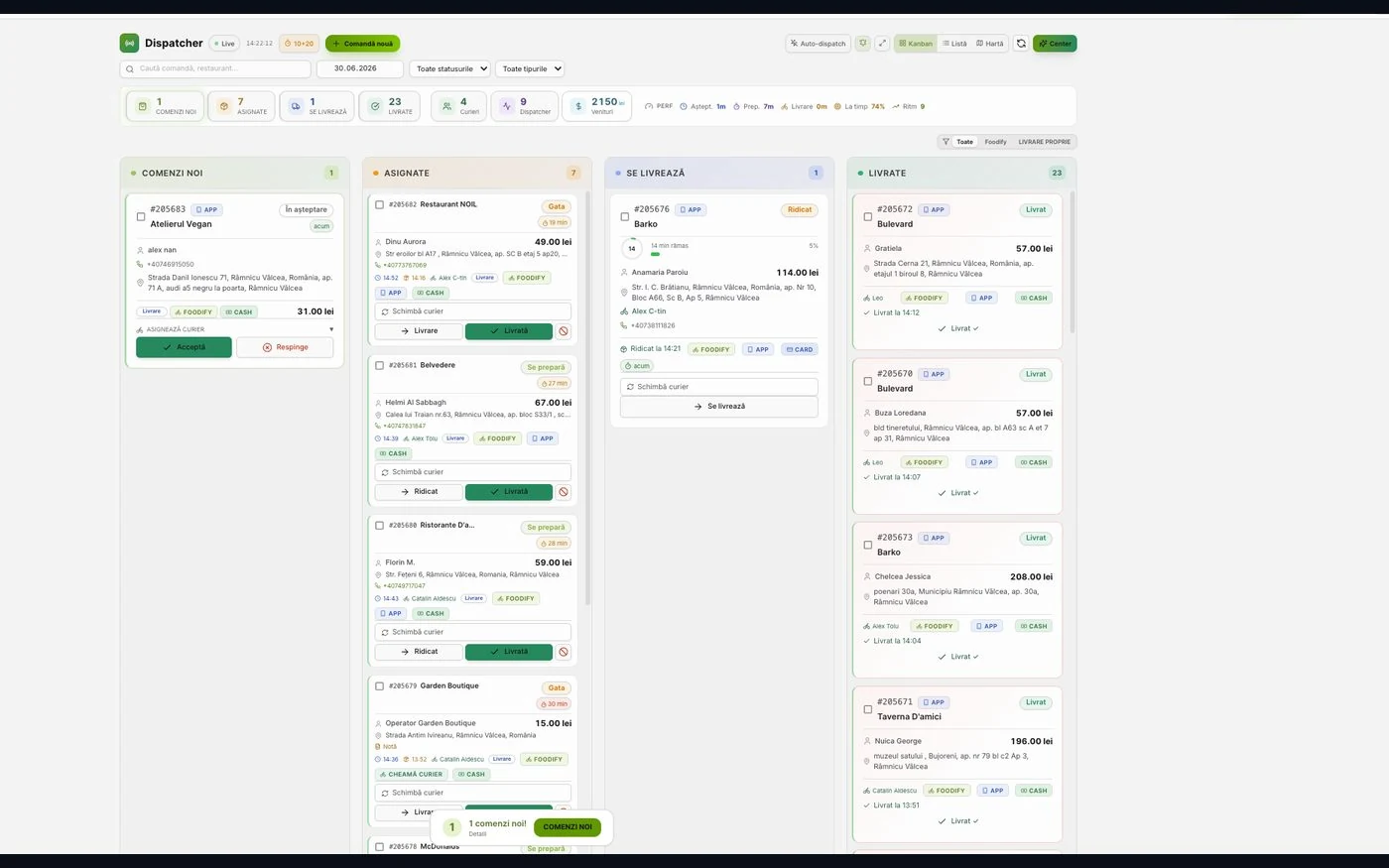
See your orders on Kanban, on the map or in the command center.
Every order moves through the live board: new → preparing → on the way → delivered. You dispatch automatically or manually, with an ETA and a prep time on every order.
- A live Kanban board, with real-time statuses
- Auto-dispatch to the nearest available courier
- Manual assignment with one click, when you want to step in
- Dark or light theme, the dispatcher's choice
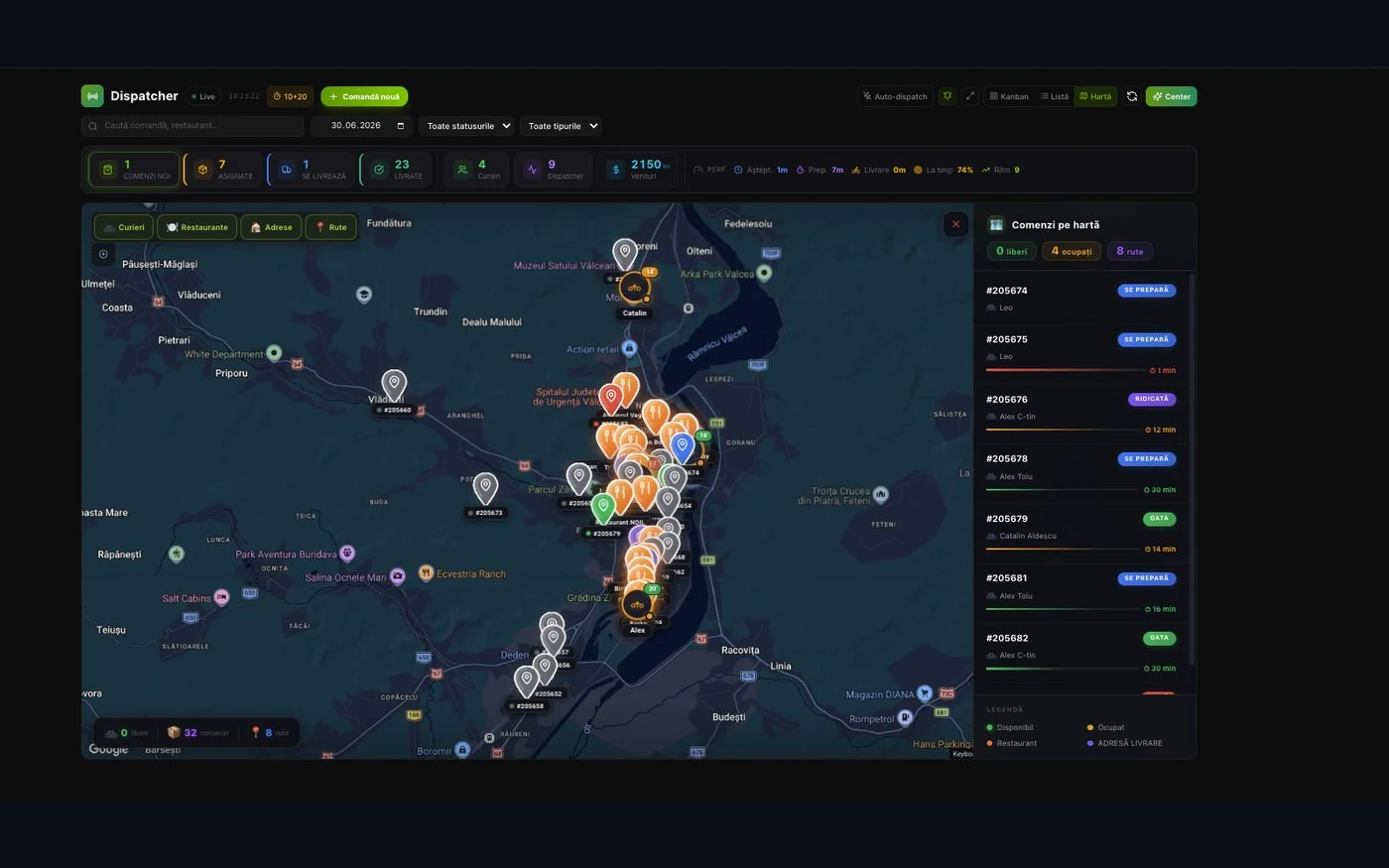
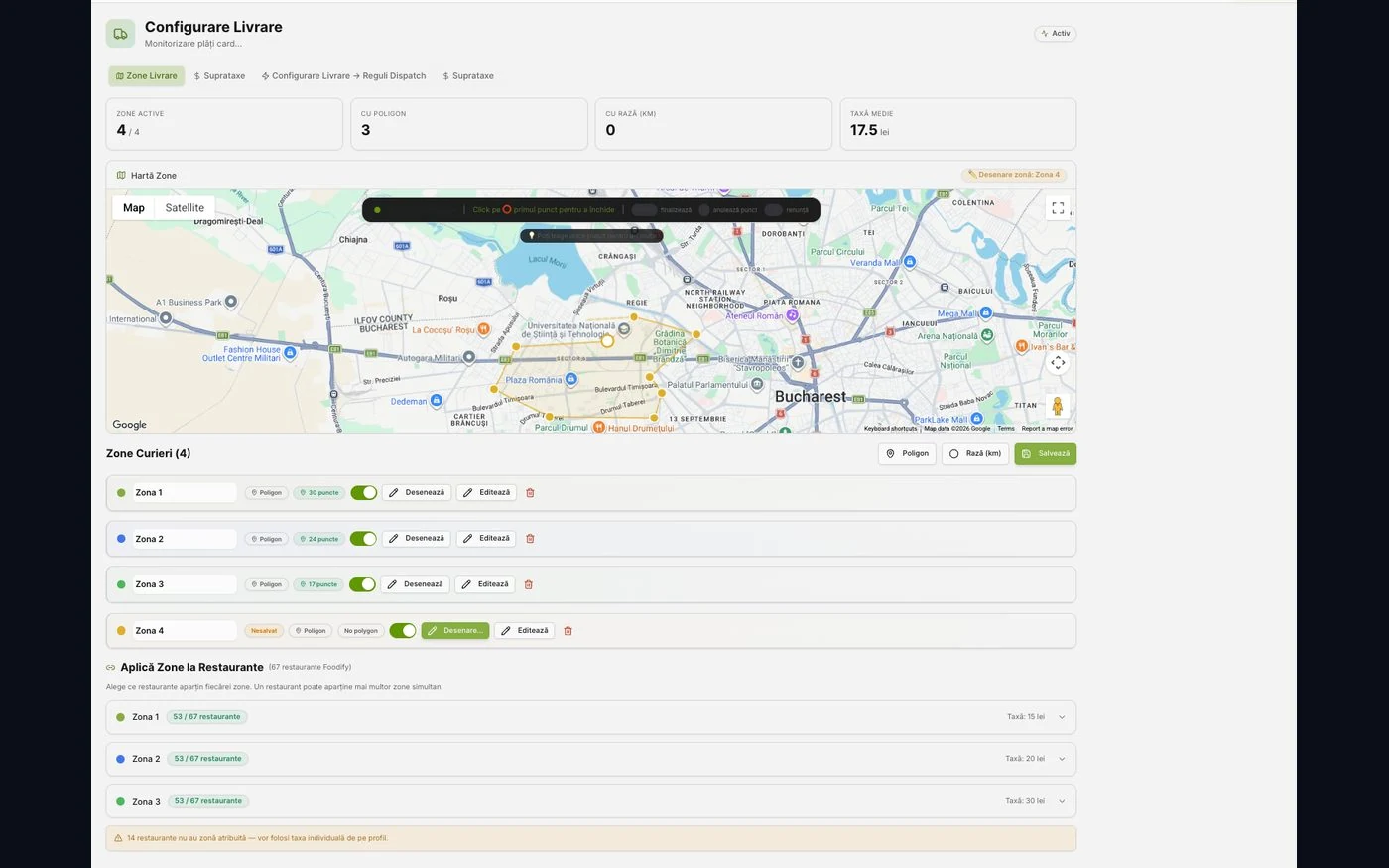
See your couriers on the map and set the zones and fees yourself.
See every courier on the move, with live GPS and the order's route. You draw the delivery zones straight on the map and set the fee for each zone, the surcharges and the dispatch rules. You control where you deliver and what it costs.
- Live GPS for every courier in the fleet
- Delivery zones drawn straight on the map
- Per-zone fees, surcharges and dispatch rules
- Routes and ETAs, visible from dispatch
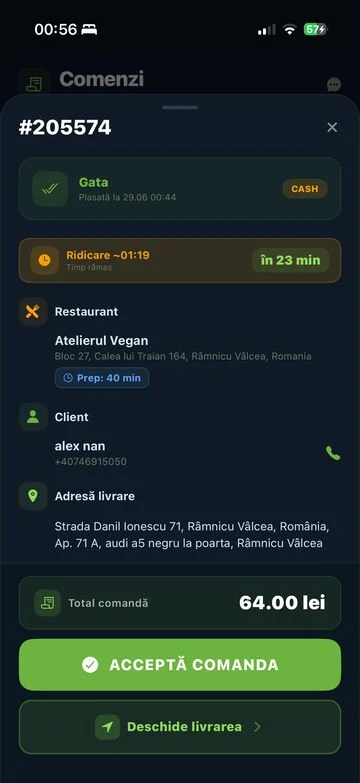
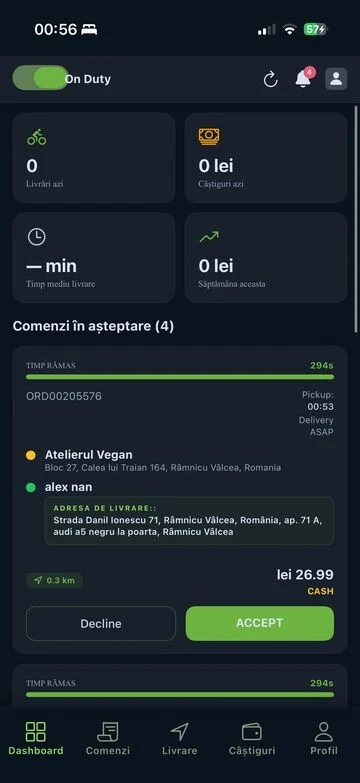
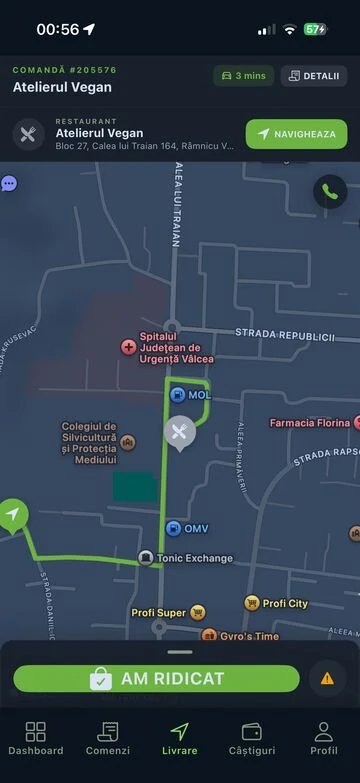
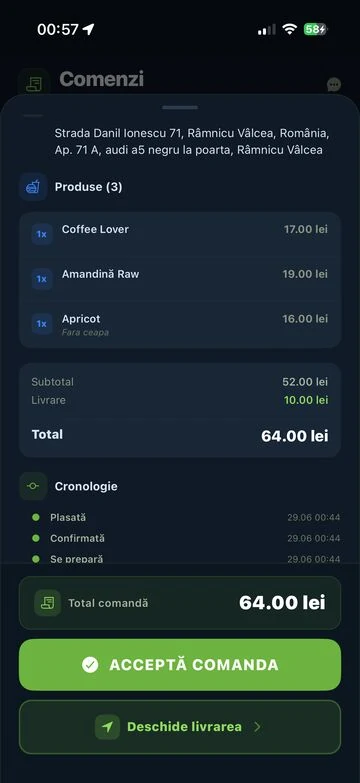
The courier app for your fleet.
Couriers get their orders in the app, accept with one tap, navigate to the restaurant and then to the customer, and confirm the delivery. Their position is sent in real time to the dispatch board and to the customer's map.
- Order acceptance + navigation to pickup and drop-off
- Delivery confirmation with one tap
- Earnings, payouts and ratings, right in the app
- iOS and Android, on the phones your couriers already have
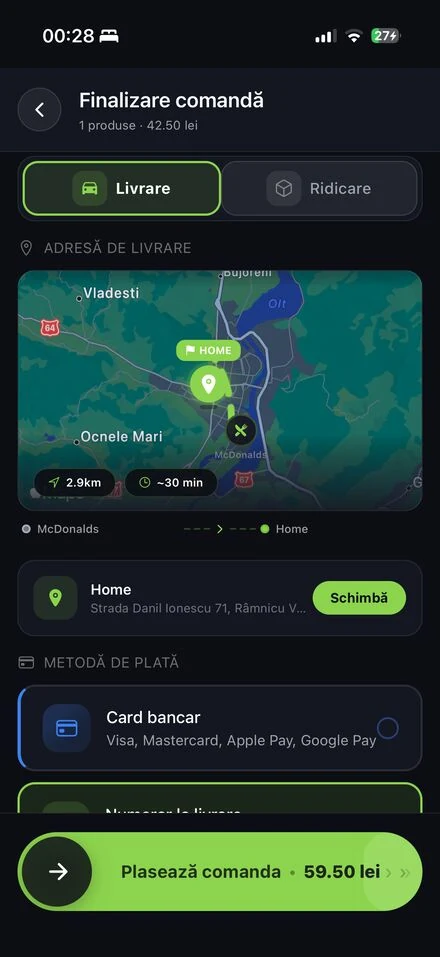
The customer tracks the courier on the map, in your app.
The customer tracks the order on the map in real time, with statuses and an ETA, in your app or straight in the browser, with nothing to install. The customer relationship stays with you.
- Live map with the courier's position
- Real-time statuses and ETA
- Works without an app too, through a browser tracking link
- On your domain, with your brand identity
Everything dispatch includes.
Dispatch
Board live- Kanban board, map and command center
- Auto-dispatch to the nearest courier
- Manual assignment with one click
- ETA and prep time on every order
Fleet & couriers
iOS & Android- Courier app for iOS and Android
- Live GPS on the map, in dispatch
- Navigation to the restaurant and to the customer
- Earnings, payouts and ratings per courier
Zones & fees
You decide- Delivery zones drawn on the map
- A delivery fee for every zone
- Configurable surcharges
- Dispatch rules per zone
Aggregators
Glovo · Wolt · Bolt- Orders land straight in the POS
- They show up on the kitchen display next to yours
- They get dispatched from the same board
- No separate tablet, no retyping
Customer experience
Your brand- Live tracking on the map
- Real-time statuses and ETA
- Browser tracking link, nothing to install
- Notifications at every step of the order
Visibility & data
Real-time- Active orders and couriers online, live
- The complete delivery history
- Performance for every courier
- The data is yours and you can export it any time
The delivery module also runs on its own, with just dispatch, couriers and zones, or together with the POS and inventory. See also the available integrations.
The courier leaves, the board knows
Wolt, Bolt Food and Glovo orders land straight in the POS, the bag is picked up and the delivery goes out: the real flow, in ten seconds.
Optimising deliveries
In practice, “optimisation” means who takes the order. That can be automated completely, and it is where a manually run dispatch desk loses the most time.
Nearest courier
The default mode: the order goes to whichever courier is closest to the venue, measured from each one’s GPS position. No dispatcher staring at a map, guessing who is nearer.
Batching along the route
Batching mode prefers couriers who are already carrying orders, so the second delivery joins a trip that is happening anyway instead of pulling another person out of the venue. It is the simplest form of optimisation and the one with the biggest effect at peak hours.
Broadcast, first to accept
For mixed fleets or self-employed riders: the order reaches everyone available, and whoever accepts first takes it. Useful when you would rather let demand find its own courier than assign one.
Priority by rating or workload
At equal distance, you can favour the better-rated courier or, the other way round, the one with fewer deliveries today, so the day balances out between people. You pick the rule once and it applies to every order.
Zones and fees, not just distance
You draw the delivery zones yourself, each with its own fee. The delivery charge and the time estimate are calculated on the real route, through Google Directions, not as the crow flies — so what the customer sees at checkout is what they pay at the door.
All the assignment modes above are changed from settings, with no technical work, and they combine with orders from the aggregators, which land on the same board.
Courier software: who it fits, and who it doesn’t
“Courier software” describes two products that have almost nothing in common. DelivCore covers one of them: delivering your own orders, with your own people. We say so plainly here, so you know in the first minute whether the rest is worth reading.
Yes, if you deliver with your own fleet
Two riders or twenty, on payroll or self-employed, carrying your venue’s orders. That is everything above: the board, the live map, auto-dispatch, delivery zones with their own fees, and the app on the courier’s phone. This is the case the module was built for.
Yes, even if you are not a restaurant
The dispatch board does not care what is in the bag. A shop delivering to the door, a bakery, a catering company or a warehouse taking its own goods across town all use the same board and the same app. The order arrives from the POS or your online shop, and from there the flow is identical.
No, if you are a parcel carrier
If you sell transport as a service, carrying other people’s parcels, DelivCore is the wrong tool: it does not generate waybills, keep consignment manifests, or connect to pickup-point networks. Parcel courier software solves a different problem from dispatching your own deliveries, and we would rather tell you now.
Sameday and FAN Courier integrations, for parcels you send through a national carrier, are on the roadmap rather than in the product. When they land, they will generate the waybill straight from the order — own-fleet delivery stays in the dispatch board either way.
Frequently asked questions
Can I use just the dispatch board, without the rest of the platform?+
How do Glovo, Wolt and Bolt orders reach the dispatch board?+
How does auto-dispatch work?+
What does the customer see during delivery?+
Do couriers need special devices?+
How does DelivCore optimise deliveries?+
Can I batch several orders onto one courier?+
Is distance measured on the map or as the crow flies?+
Can I use DelivCore for my parcel courier company?+
Does DelivCore generate Sameday or FAN Courier waybills?+
See dispatch on a real order.
No obligation. We show you the whole flow, from the new order to the customer's door, with your fleet and the aggregators on the same board.
Get each restaurant ready for its first order.
Use the restaurant onboarding checklist to prepare menus, availability, staff responsibilities and courier handoff. Run the go-live checks with a complete test order before opening to customers.
Dispatch for a multi-restaurant marketplace.
Running a service like Glovo or Wolt involves both an ordering channel and a delivery operation. Explore the multi-restaurant marketplace software and the branded customer and courier apps to see how those parts connect.
In your demo, follow an order waiting for collection, review its assignment and check what the courier and operator see. Confirm who intervenes when preparation is late or a courier cannot complete a trip.